

You've probably heard about Florida Land Trusts, the "secret weapon" for privacy and estate planning in real estate. But here's the million-dollar question: should you use a third-party trustee, or just name yourself?
It sounds like a simple choice, but the answer affects everything from your closing timeline to your tax bill to whether your spouse needs to sign. Let's break it down the way we see it every day at the closing table.
First, the Quick Background
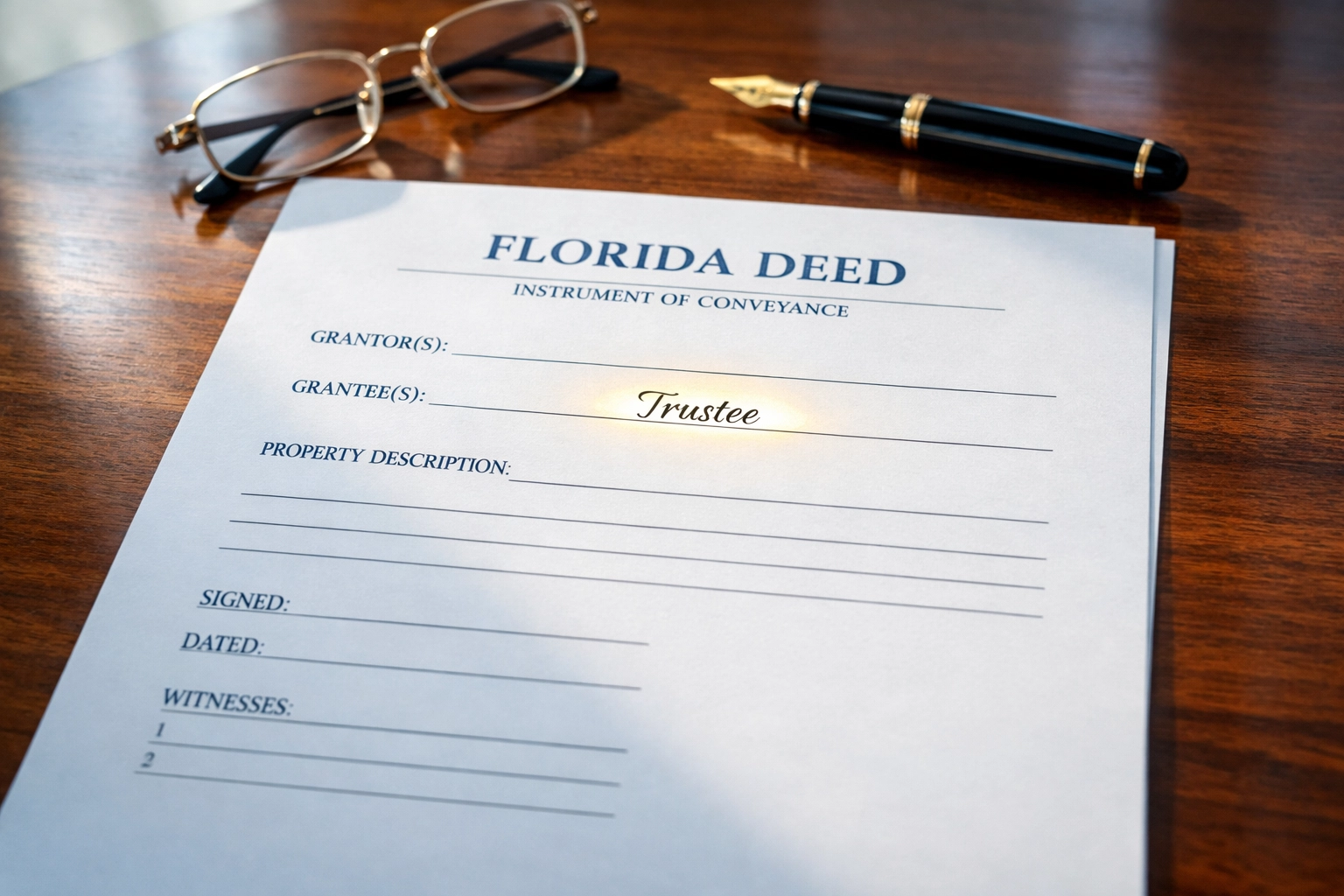
Florida Land Trusts are governed by Section 689.071, Florida Statutes. They allow real property to be held in the name of a trustee while you (the beneficiary) retain full control and beneficial ownership.
Think of it like this: the trustee's name is on the deed, but you're still calling all the shots, and getting all the benefits.
When structured properly, we can often rely on the vesting deed alone without needing to review the entire trust agreement. That's a huge time-saver at closing. But the key phrase is "when structured properly."
The PROS of Using a Third-Party Trustee
1. Privacy Protection at Its Finest
This is the big one. When a third-party trustee (like an attorney or trust company) holds title:
- Public records show only the trustee's name
- Your identity stays completely off the deed
- Assignments of beneficial interest don't need to be recorded
Real-world example: An investor we work with flips five properties a year. The public sees the same trustee's name on all of them, not the investor's. For high-profile individuals, business owners, or anyone who values privacy, this is often the entire point.
2. Clean Separation of Control
A legitimate third-party trustee:
- Signs documents only at your direction
- Has no ownership interest whatsoever
- Creates a clear "paper wall" between the property and you personally
This separation can be valuable for asset structuring strategies, though you should always work with an attorney on asset protection planning.
3. Smoother Transfer of Beneficial Interest
Here's something many people don't realize: the beneficial interest in a land trust can be assigned privately, without recording anything.
Important caveat: Assignment of beneficial interest is still subject to documentary stamp tax in Florida, even if you don't record it. This is one of the most common mistakes we see, people assume "no recording equals no tax." Wrong. The tax man still gets his cut.
4. Built-In Continuity
If you pass away:
- The trustee remains in place
- Property typically doesn't require probate
- The beneficial interest transfers according to your estate planning documents
From a closing standpoint, this continuity makes transitions much smoother.
The CONS of Using a Third-Party Trustee
Now let's talk about the real-world headaches.
1. You're Giving Up Direct Control
This is the biggest risk. You're placing legal title in someone else's name.
Even though trustees are fiduciaries bound by law to follow your instructions:
- They must sign deeds and mortgages
- If they become uncooperative, incapacitated, or simply unreachable, your transaction grinds to a halt
- We've seen deals fall apart because a trustee went on vacation at the wrong time
From an underwriting standpoint, we must verify trustee authority, proper successor appointments, and compliance with statutory requirements. That adds time and complexity to every closing.
2. Extra Requirements at Closing
When the trustee is a third party, we may require:
- Certification of Trust (if trust powers aren't in the vesting deed)
- Proof of successor trustee appointment
- Homestead confirmation or non-homestead language
- Additional affidavits
If your vesting deed properly incorporates Section 689.071 powers, we often don't need the full trust agreement: which is ideal. But if it doesn't? Underwriting becomes significantly more involved.

3. Homestead Complications (This Is a Big One)
If the property is your homestead:
- Spousal joinder may be required
- Constitutional protections apply regardless of trust structure
- A third-party trustee does NOT eliminate Florida homestead restrictions
We always remind agents: "You can't trust your way around the Florida Constitution." Homestead is homestead, no matter how clever your structure.
4. Lender Concerns
Some lenders simply don't like third-party trustees. They may:
- Require beneficiary guarantees
- Demand full trust review
- Apply additional underwriting overlays
Even though Florida law permits land trusts, lenders have their own rules: and they don't always play nice with creative structures.
5. Documentary Stamp Tax Confusion
Many people incorrectly assume: no deed recorded = no tax owed.
But here's the reality:
- Assignments of beneficial interest are taxable
- Transfers subject to mortgages trigger doc stamps based on the outstanding loan balance
- Tax audits happen, and they're not fun
This is where DIY trust documents get people in trouble. We've seen it cost tens of thousands in back taxes and penalties.
Side-by-Side Comparison
| Issue | Third-Party Trustee | Self-Trustee (You as Trustee) |
|---|---|---|
| Privacy | Strong: your name stays off public records | Limited: your name appears on the deed |
| Control | Less direct: trustee must sign everything | Full: you sign directly |
| Closing Complexity | Moderate to high | Usually simpler |
| Homestead Protections | Still apply | Still apply |
| Underwriting Scrutiny | Higher | Lower |
| Lender Acceptance | Sometimes challenging | Generally easier |

When We Recommend a Third-Party Trustee
From a title and underwriting standpoint, it makes sense when:
✓ The property is investment property (not owner-occupied)
✓ Privacy is a primary goal
✓ You have a sophisticated estate or asset plan
✓ The trustee is reliable, organized, and responsive
✓ The trust was drafted by experienced Florida counsel (not downloaded online)
When We Caution Against It
⚠ Owner-occupied homestead property
⚠ Informal "handshake" trustee arrangements
⚠ DIY trust documents or online templates
⚠ Frequent refinancing anticipated
⚠ You need maximum flexibility and speed
The Underwriter's Bottom Line
A third-party trustee:
- Increases privacy significantly
- Adds structural separation between you and the property
- Requires more diligence at closing
- Does not let you avoid Florida homestead law
- Does not eliminate documentary stamp tax obligations
Used properly, it's a powerful tool for the right situation. Used casually or without proper legal guidance, it creates closing delays, underwriting headaches, and potential tax liability.
The key is matching the structure to your actual goals: not just following the latest real estate seminar advice.
Work With a Title Company That Gets It
At Independence Title, we see land trusts every single day. We understand the underwriting nuances, the Title Note 31.02.02 requirements, and exactly what documentation we need to close smoothly.
Whether you're using a third-party trustee or serving as your own, we'll make sure your structure is properly documented, your closing goes off without a hitch, and you're not creating surprise tax obligations down the road.
Have questions about your specific situation? We're here to help. Because in Florida real estate, the details matter: and we're detail people.
Ready to talk about your next closing? Reach out to our team and let's make sure your land trust is set up right from day one.