

You're about to close on a Fort Lauderdale condo, and your title company offers you the option to close electronically. Your first instinct? "Wait, isn't doing this online less secure?"
Think again.
The truth is, when done correctly, electronic closings (eClosings) are often more secure than traditional in-person closings. Between multi-layer identity verification, tamper-evident digital seals, encrypted document storage, and real-time audit trails, modern eClosing technology has turned what sounds risky into one of the safest ways to transfer property ownership.
Let's break down how it actually works, and why Fort Lauderdale buyers, sellers, and out-of-state investors are increasingly choosing digital over desk chairs.
What Exactly Is an eClosing?
An eClosing is a real estate closing where some or all of the documents are signed electronically instead of with pen and paper. It doesn't mean you're skipping steps or cutting corners, it means you're replacing manual processes with secure, digital workflows.
There are different levels of eClosing:
- Hybrid eClosing: Most documents are signed electronically, but certain items (like the promissory note or deed) may still require wet signatures or in-person notarization.
- Full eClosing: Everything, including notarization, happens digitally using Remote Online Notarization (RON).
Both options still involve your title company, lender, notary, and all the same legal protections. The difference is how and where the signatures happen.
What Is Remote Online Notarization (RON)?
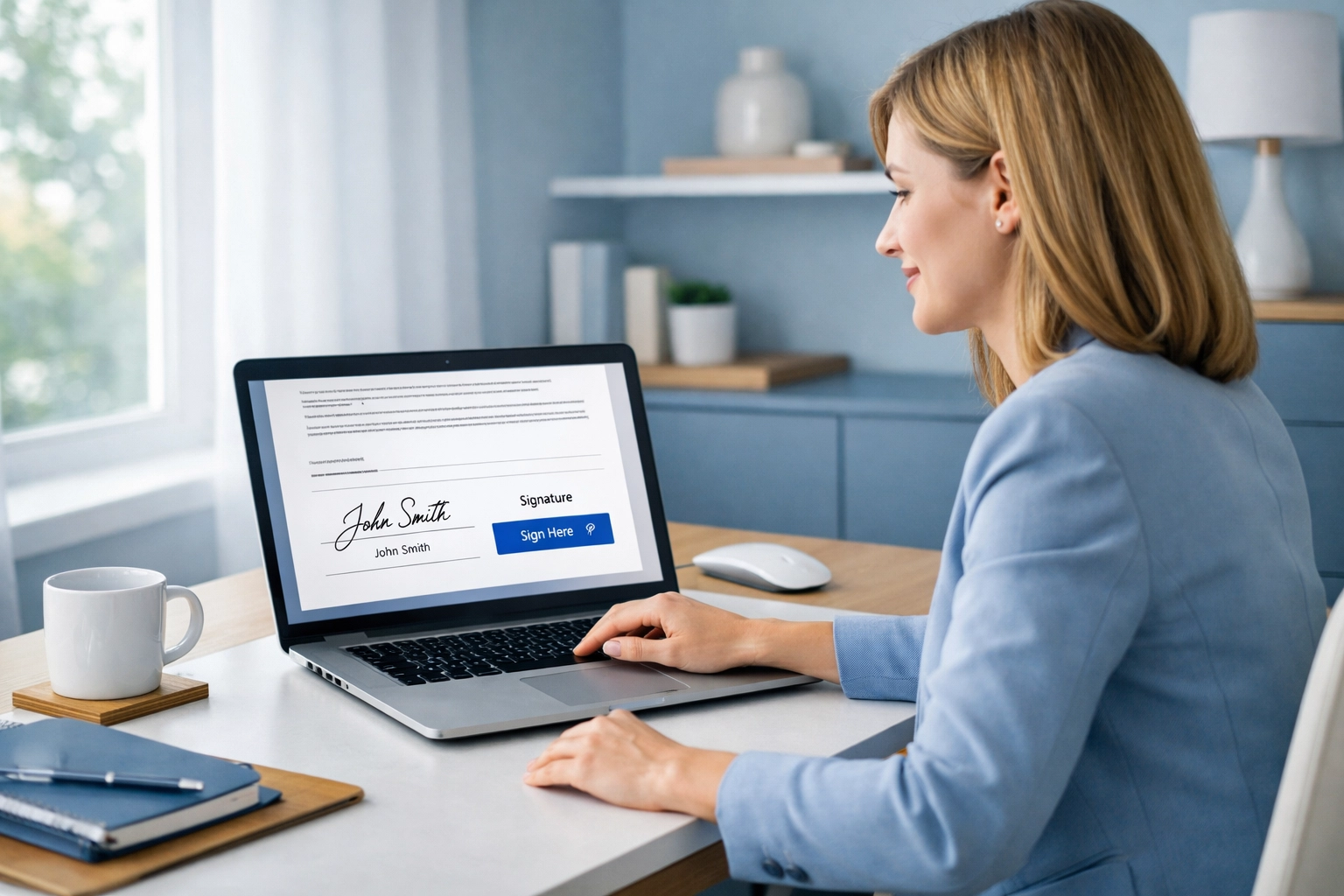
Remote Online Notarization (RON) is the technology that makes full eClosings possible. It allows a notary public to witness your signature via live video conference, verify your identity digitally, and apply an official electronic notarial seal, all without you being in the same room.
Florida legalized RON in 2019, and it's been growing steadily ever since. Here's how a typical RON session works:
- You join a secure video call with a licensed Florida notary.
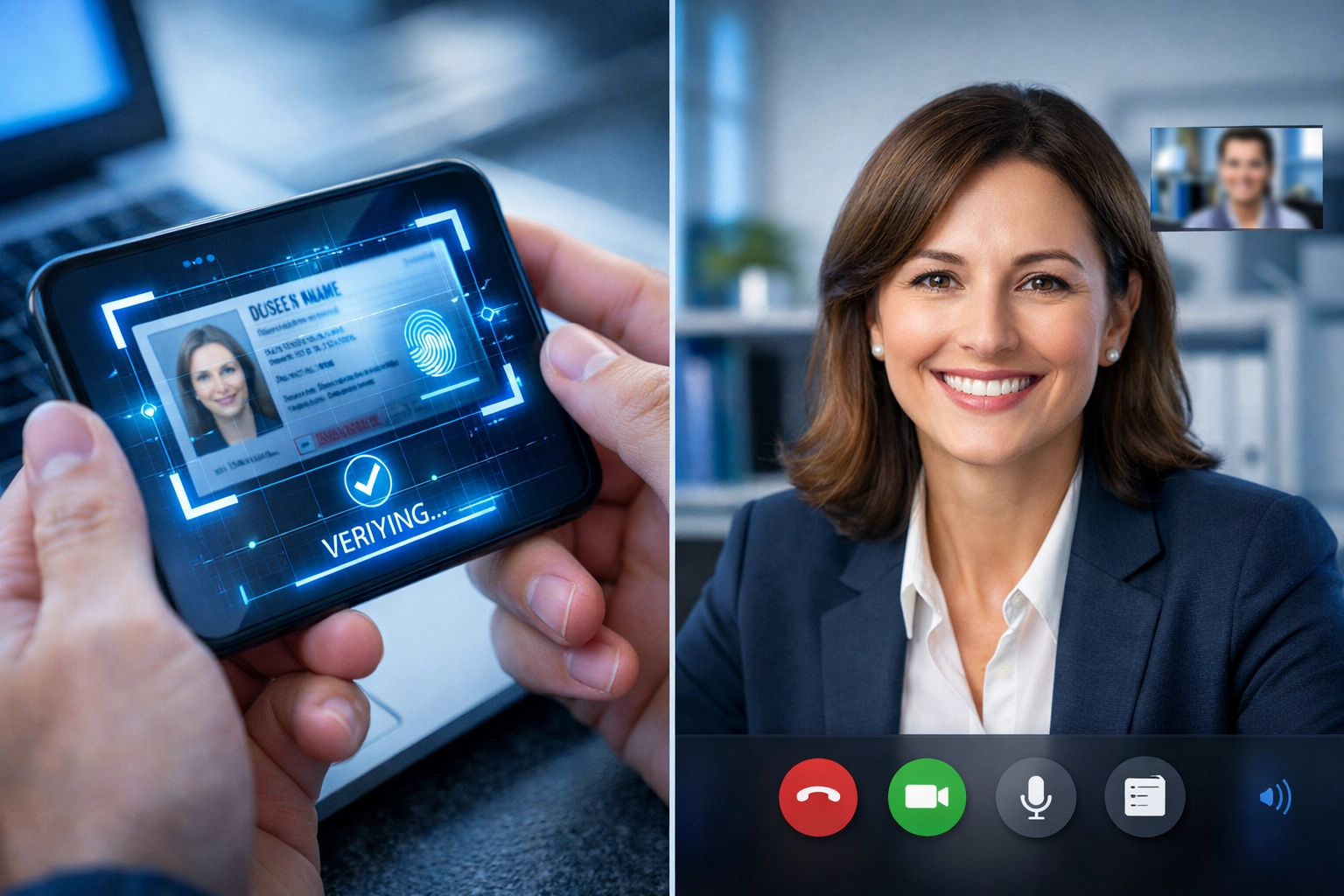
- Identity verification happens in real time: You upload a government-issued ID, answer knowledge-based authentication questions, and sometimes undergo biometric checks (like facial recognition).
- You review and sign documents on a secure platform while the notary watches.
- The notary applies a tamper-evident digital seal and records the entire session for compliance.
The session is encrypted, recorded, and stored, creating a permanent audit trail that's far more traceable than a signature scribbled in a conference room.
The Security Features That Make eClosing Safer Than Paper
Let's get specific. Here's why eClosing technology isn't just "as safe" as in-person closings, it's often safer.
1. Multi-Factor Identity Proofing
In a traditional closing, someone checks your driver's license for a few seconds. In an eClosing with RON, your identity is verified through:
- ID scanning and authentication: The system checks for security features, holograms, and signs of tampering.
- Knowledge-based authentication (KBA): You answer questions based on your credit history or public records that only you would know.
- Biometric verification: Some platforms use facial recognition to match your live video feed to your ID photo.
This layered approach makes impersonation fraud significantly harder to pull off.
2. Tamper-Evident Digital Seals
When a notary applies an electronic seal, the document becomes cryptographically locked. If anyone tries to alter the document after it's been notarized, the seal breaks, and it's immediately obvious.
Paper documents? They can be scanned, edited, reprinted, and re-signed without anyone noticing until it's too late.
3. Encrypted Document Storage and Transmission
Every document in an eClosing is transmitted via encrypted channels and stored on secure, SOC 2-compliant platforms. That means:
- No lost paperwork
- No documents sitting in unsecured email inboxes
- No risk of someone walking out of a closing office with sensitive financial information
Compare that to paper files that get scanned, emailed, faxed, and photocopied across multiple parties.
4. Full Audit Trails
With eClosing, every action is logged: when you opened a document, how long you viewed it, when you signed it, and who witnessed it. If a dispute arises, you have a complete digital record.
Traditional closings? Unless someone took detailed notes, good luck reconstructing exactly what happened.
The Convenience Factor: Why Out-of-State Investors Love eClosing
Security is one thing. Efficiency is another. And for investors buying rental properties in Fort Lauderdale from New York, Toronto, or São Paulo, eClosing is a game-changer.
Here's what eClosing eliminates:
- Flying in for a 20-minute closing appointment
- Coordinating schedules across multiple time zones
- Scrambling to find a mobile notary in your city who can do a mail-away closing
- Waiting days for documents to arrive via FedEx
With RON, you can close on a Pompano Beach duplex from your kitchen table in Chicago, on a Saturday morning if that's what works for your schedule.
This flexibility is especially valuable for:
- Foreign investors who can't easily travel to the U.S.
- Active-duty military stationed overseas
- Busy professionals juggling multiple deals
- Sellers who've already relocated and don't want to fly back for closing
Why Fort Lauderdale Buyers Are Choosing eClosing (Even When They Live Here)
You'd think eClosing would only appeal to long-distance buyers. But Fort Lauderdale locals are opting in too, and not just for convenience.
Here's why:
1. Safer Wire Transfer Processes
Wire fraud is rampant in real estate. Scammers spoof email addresses, send fake wiring instructions, and steal hundreds of thousands of dollars before anyone realizes what happened.
eClosing platforms integrate wire instructions directly into the secure portal. You're not copying and pasting account numbers from an email, you're retrieving verified instructions from an encrypted system. Many title companies also use multi-step verification calls before releasing funds.
2. Fewer Last-Minute Delays
Ever had a closing delayed because someone forgot to initial page 47? With eClosing software, required fields are flagged automatically. You can't submit a document until every signature, initial, and date field is complete.
This means fewer mistakes, fewer re-signings, and fewer delays.
3. Document Access After Closing
Your closing documents are stored securely in the cloud. Need a copy of your deed three years from now? Log in and download it. No more digging through filing cabinets or paying your title company for copies.
4. Health and Safety (Yes, Still Relevant)
Even post-pandemic, some buyers prefer limiting in-person interactions: especially when handling high-value transactions. eClosing removes the need to sit in a conference room for an hour with multiple strangers.
Hybrid Closings: The Best of Both Worlds
Not ready to go fully digital? Hybrid closings let you sign most documents electronically while still meeting a notary in person for key items like the deed or mortgage note.
This approach is popular with:
- First-time homebuyers who want the reassurance of face-to-face guidance
- Buyers with complex transactions involving trusts, LLCs, or power of attorney
- Anyone who prefers a mix of digital efficiency and traditional interaction
At Independence Title, we offer both full eClosing and hybrid options. You choose what feels right for your transaction.

What About Lender Requirements?
Here's a common question: "Does my lender allow eClosing?"
Most major lenders now accept electronically signed documents, but some still require wet signatures on specific items (like the promissory note). Your title company will coordinate with your lender to determine which documents can be signed electronically and which need traditional signatures.
If your lender doesn't support full eClosing yet, a hybrid approach usually works.
The Bottom Line: Technology Done Right Is Safer
The idea that "digital = risky" is outdated. When eClosing technology is implemented correctly: with identity verification, encryption, tamper-evident seals, and audit trails: it creates a more secure closing process than shuffling paper documents across desks.
Fort Lauderdale title companies like Independence Title have embraced this technology not because it's trendy, but because it protects buyers, sellers, and lenders from fraud, errors, and delays.
Whether you're an out-of-state investor closing on your fifth rental property or a local buyer purchasing your first condo, eClosing gives you flexibility without sacrificing security.
Want to learn more about how eClosing works for your specific transaction? Reach out to Independence Title. We'll walk you through your options: digital, hybrid, or traditional: and help you choose the closing experience that works best for you.
Because at the end of the day, a safer closing is a better closing.