
Buying a home should feel exciting. It should not feel like you are inheriting someone else’s unresolved paperwork.
Before you receive the keys to a Fort Lauderdale home, someone must confirm that the seller has the legal right to transfer the property and that no hidden title problem will threaten your ownership. That is the purpose of clear and marketable title.
As The Title King and Founder and CEO of Independence Title, I believe buyers deserve to understand what is happening behind the scenes. The language may sound technical, but the goal is simple: protect what matters most.
The Truth: A Beautiful Property Can Still Have a Title Problem
A clean kitchen, new roof, and waterfront view do not tell you whether the title is ready to transfer.
A property may look perfect while the public records reveal an unpaid lien, an unreleased mortgage, a probate issue, a judgment against a former owner, or a legal description that does not match the property being sold.
For example, a buyer may agree to purchase a renovated home in Broward County. The seller may have paid a contractor, but the contractor’s lien release was never recorded. Until that issue is addressed, the lien may create a problem for the buyer, the lender, or the future resale of the property.
Another Fort Lauderdale example involves an older home with a shared driveway. The driveway may have been used by neighboring owners for decades, but the recorded easement may affect how the buyer can use, improve, or resell the property.
That is why a title search matters. The closing process is not only about signing documents and transferring money. It is about confirming that ownership can transfer with confidence.
The Lesson: Clear Title and Marketable Title Are Related, but Not Identical
Clear title generally means the ownership record does not show unresolved liens, claims, or defects that would interfere with the transfer.
Marketable title means the title is reasonably acceptable to a buyer and lender. It can be transferred without a serious doubt about ownership or a significant risk that someone else could assert a claim.
Marketable title does not mean the property has no recorded restrictions at all. Most homes have easements, subdivision restrictions, utility rights, or homeowners association documents. These items may be acceptable and may not prevent a sale.
The key question is whether the issue materially affects ownership, use, financing, or resale.
The Florida Bar’s consumer guide to buying a home explains that marketable title depends on whether ownership can be established against the world and properly supported by the public records. A title professional or real estate attorney reviews the chain of title and determines what must be addressed.
That distinction matters. A title can be insurable while still requiring work before closing. The job is to identify the issue, explain it, and determine the proper solution.
How the Title Search and Commitment Work
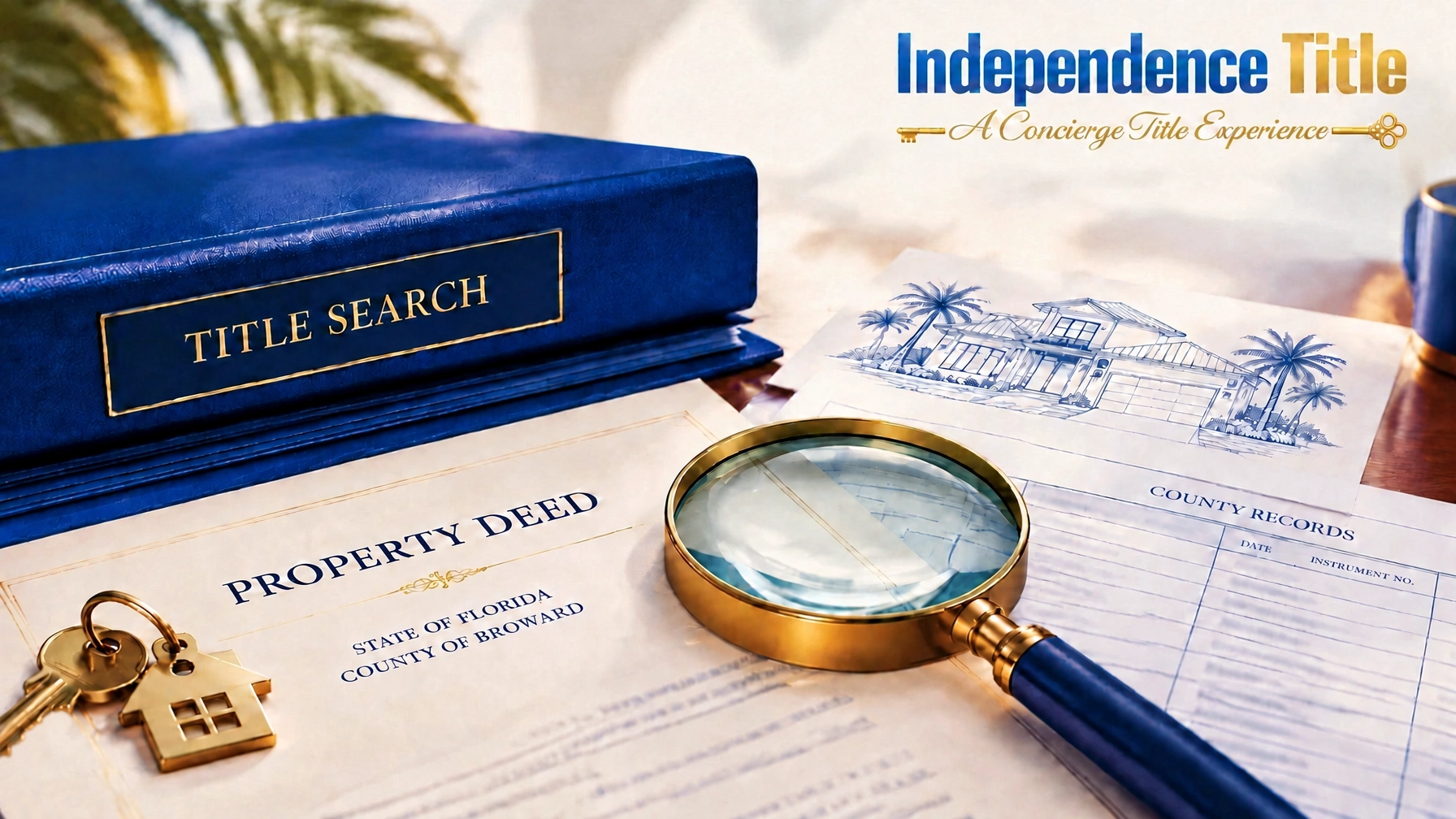
A title search is a detailed review of public records connected to the property. The search may include deeds, mortgages, judgments, tax records, probate documents, court records, easements, restrictions, and other recorded instruments.
The title examiner is looking for answers to practical questions:
- Who currently owns the property?
- Did ownership transfer correctly from one owner to the next?
- Are there unpaid taxes, mortgages, judgments, or liens?
- Are there restrictions or easements affecting the property?
- Are all required parties available to sign?
- Does the seller have the authority to transfer the property?
- Are there issues involving probate, divorce, trusts, corporations, or prior foreclosures?
After the search and examination, the title company issues a title commitment. Think of it as a roadmap to the final title insurance policies.
A commitment commonly includes:
- Schedule A: Basic details about the proposed insured, property, current owner, and policy amounts.
- Schedule B-I requirements: Items that must be completed before the policies can be issued. These may include recording a deed, paying off a mortgage, obtaining lien releases, or providing affidavits.
- Schedule B-II exceptions: Matters the policy will not cover unless they are removed, modified, or otherwise addressed.
Buyers should review the commitment promptly. Florida contracts often provide a limited period to object to unacceptable title matters. The exact deadline depends on the contract, so buyers should calendar it immediately and consult their real estate professional or attorney when needed.
Common Clouds on Title in Florida
A cloud on title is an issue that creates doubt about ownership or limits the ability to transfer the property cleanly.
Common examples include:
Unpaid mortgages and taxes
A prior mortgage may have been paid years ago, but the satisfaction was never recorded. Property taxes or special assessments may also remain unpaid. These amounts usually must be resolved before closing.
Judgment liens
A judgment against a property owner may attach to the property or affect the seller’s ability to convey marketable title. The closing team may need a payoff, release, or other documentation.
Contractor and construction liens
Florida properties can face liens related to unpaid construction work, materials, or improvements. This can be especially important when a home was recently remodeled, built, or repaired.
Probate and heirship issues
If a prior owner died, the title may require probate documents, estate affidavits, or signatures from heirs. A sale cannot always proceed simply because one family member believes they inherited the property.
Incorrect or incomplete legal descriptions
An address is not the same as a legal description. A mismatch between the contract, deed, survey, and public records can create confusion that must be corrected.
Easements and restrictions
An easement may provide access to a neighbor, utility company, drainage district, or association. Restrictions may control additions, parking, fencing, rentals, or other uses.
Forged, fraudulent, or improperly executed documents
A forged deed or improperly signed document can disrupt the chain of title. Title insurance may provide protection for covered risks, but prevention and careful examination remain essential.
Independence Title provides additional education on common title issues in Florida and what a title insurance policy covers.
The Playbook: What Buyers Should Do
1. Choose experienced title professionals early.
Do not wait until the week of closing to discover a title problem. Early review creates time for research, communication, and curative work.
2. Read the title commitment.
Ask for a copy and review Schedule A, Schedule B-I, and Schedule B-II. You do not need to understand every legal term immediately. You do need to ask questions about anything you do not understand.
3. Separate routine exceptions from serious concerns.
A standard utility easement may be routine. A judgment lien, unresolved probate issue, or boundary conflict may require more attention.
4. Order a survey when appropriate.
A survey can help identify encroachments, boundary questions, fences outside the property line, and improvements that cross an easement. Lenders may also require one.
5. Allow time for curative work.
Curative work is the process of fixing title issues. It may involve recording a corrective deed, obtaining a mortgage satisfaction, paying a lien, securing probate documents, obtaining an affidavit, resolving a legal description issue, or requesting an endorsement.
Some issues are resolved quickly. Others require cooperation from prior owners, lenders, contractors, heirs, government offices, or attorneys. Slow is smooth. Smooth is fast when the alternative is discovering a problem after closing.
6. Confirm what the policy covers.
Title insurance is not a substitute for reading the commitment. Ask which exceptions will remain and whether additional coverage or endorsements are available.
7. Verify closing instructions independently.
A clear title does not protect a buyer who wires funds to a fraudster. The wire is never real until it is verified. Call the title company using a trusted phone number, not only the number included in an unexpected email.
Owner’s and Lender’s Title Insurance
A lender’s title insurance policy protects the lender’s mortgage interest. If a covered title defect threatens the lender’s security, the lender’s policy may provide protection according to its terms.
That policy does not protect the buyer’s equity.
An owner’s title insurance policy protects the buyer’s ownership interest against covered title defects that existed before the policy date. Depending on the policy and facts, coverage may include certain ownership claims, recording errors, forged documents, unpaid obligations, or other covered risks.
The owner’s policy is generally a one-time premium paid at closing. It remains in effect according to the policy terms, often for as long as the insured owns the property.

Coverage is not unlimited. Exceptions, exclusions, policy limits, and specific conditions matter. A title insurance policy is a contract, and the policy language controls.
The Florida Bar explains the role of title commitments and title insurance, including why a lender’s policy protects the lender rather than the buyer. Buyers should discuss their specific circumstances with their attorney, title professional, and lender.
A Clear Title Is Worth Being Thankful For
When a Broward buyer reaches closing with resolved requirements, understood exceptions, and the right insurance in place, that is worth appreciating.
The buyer can focus on moving in, building equity, and enjoying the property instead of worrying about an old lien or ownership claim appearing later.
At Independence Title, our goal is to provide A Concierge Title Experience with clear communication, careful title work, and a closing process that keeps the parties informed.
If you are buying a home in Fort Lauderdale or anywhere in Florida, start the conversation early. Ask what the title search found, what the commitment requires, and what remains excluded from coverage.
Learn. Teach. Lead. Repeat. That is how we create safer transactions and more confident homeowners.
Important Disclaimer
This article is provided for general educational purposes only and is not legal, tax, financial, or insurance advice. Every real estate transaction is different. Title insurance coverage depends on the specific policy language, endorsements, exceptions, exclusions, conditions, and facts of the transaction. Consult a qualified Florida-licensed attorney, tax professional, lender, or title insurance professional regarding your specific situation.