
A buyer in Hallandale Beach almost lost $250,000 to a scammer who didn't just steal someone's identity: he used artificial intelligence to bring a fake seller to life on a video call.
The fraud nearly worked. The documents looked real. The passport checked out. Even the Zoom verification call seemed legitimate at first. But when the title company asked one more question, the entire scheme unraveled.
Welcome to the new frontier of real estate fraud. Deepfakes aren't just Hollywood tricks anymore. They're hitting South Florida closings, and if your title company isn't actively looking for them, you're already behind.
What Happened in the Hallandale Beach Case
Florida Title & Trust stopped a deepfake scam before closing. A scammer posed as the owner of a property using AI-generated video and forged documents. The "seller" appeared on a Zoom call, answered questions, and provided what looked like valid identification.
The property actually belonged to a missing California woman who had passed away. Her niece had been quietly paying the taxes. The home was never for sale.
The scammer's mistake? He underestimated the title company's verification process. When the team requested additional proof-of-life documentation, the AI façade cracked. The video showed subtle visual artifacts. The backstory didn't match the tax records. Red flags started piling up.
Without that extra layer of scrutiny, a buyer would have wired a quarter-million dollars into a scammer's account, and the real property owner's heirs would have been left with a legal nightmare.
This isn't an isolated case. It's the beginning of a pattern.

The 7 Red Flags Your Title Company Should Catch
If your title company in Fort Lauderdale, FL isn't actively screening for these warning signs, you're at risk. Here's what to watch for during every closing.
1. Urgent Tone or Pressure to Close Fast
Scammers thrive on urgency. They'll push for a quick closing, claim they're out of the country, or insist on skipping standard verification steps "just this once."
If a seller is suddenly unavailable for a live call or demands the deal close within 48 hours with no flexibility, stop. Legitimate sellers understand that verification protects everyone. Fraudsters hate delays because delays expose inconsistencies.
2. Last-Minute Changes to Wiring Instructions
This is the oldest trick in the fraud playbook, but it's still devastatingly effective. A scammer impersonates the seller or closing agent and emails new wiring instructions hours before closing.
If wiring details change at any point: even if the email looks legitimate: verify the change with a phone call to a number you already have on file. Never use contact information from the email itself. Independence Title has a secure verification protocol specifically for this scenario, and we've prevented wire fraud countless times using this exact process.
3. Refusal to Participate in a Live, Unfiltered Video Call
Video calls are standard practice now, but deepfakes are getting harder to detect. If a seller refuses to turn on their camera, insists on using heavy filters, or claims technical issues every time you request video verification, you're looking at a red flag.
In the Hallandale Beach case, the scammer did participate in a video call: but the AI-generated image had unnatural movements and visual artifacts. A trained eye caught it. An untrained one might not have.
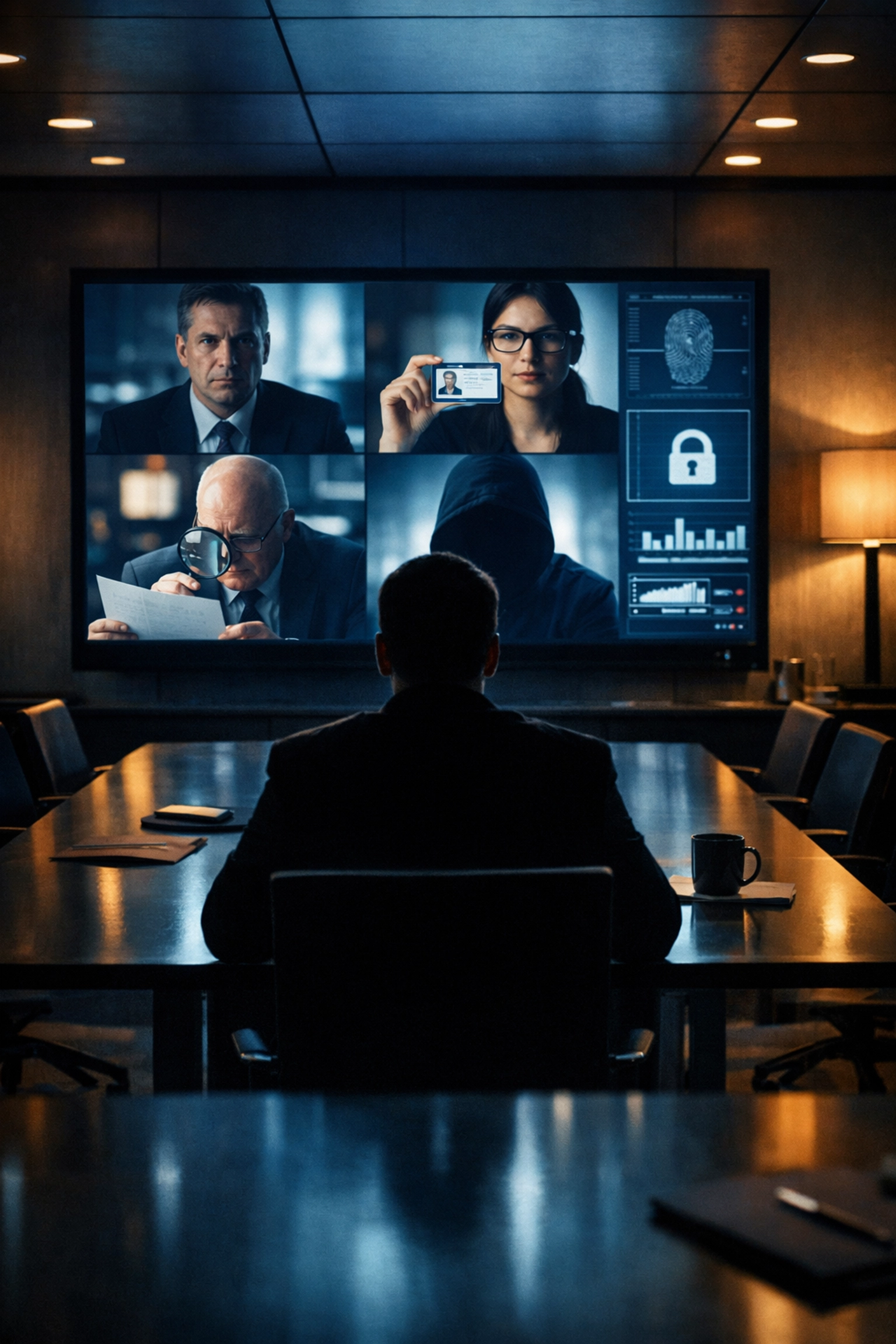
Your title company in Broward should be conducting multi-angle video verification. Ask the person to move their head, hold up their ID next to their face, and answer spontaneous questions that can't be pre-scripted by AI.

4. Geographic Inconsistencies in Seller Information
Tax bills sent to one state. A seller who claims to live in another. Property records showing a third address entirely.
In the Florida case, the tax bills were addressed to the Bahamas while the seller claimed to be in West Virginia. That kind of mismatch should immediately trigger a deeper investigation.
Your title company should be cross-referencing every piece of information: property tax records, utilities, deed history, and stated residence. If the puzzle pieces don't fit, the deal shouldn't close.
5. Communication Restricted to Text or Email Only
The Hallandale Beach scammer claimed to be deaf and requested all communication via text. On its own, that's not necessarily fraud. But combined with other red flags, it's a tactic to avoid voice verification.
Voice cloning is now a real threat in real estate fraud. Scammers can use short audio clips: pulled from social media, voicemails, or public videos: to generate convincing voice deepfakes. If someone suddenly refuses phone calls after previously being communicative, ask why.
A legitimate seller will accommodate reasonable verification requests, even if it requires alternative communication methods. A scammer will make excuses and deflect.
6. Visual or Audio Artifacts During Video or Phone Calls
AI-generated deepfakes are improving rapidly, but they're not perfect yet. Watch for:
- Unnatural blinking patterns
- Lips that don't quite sync with speech
- Odd lighting or shadowing around the face
- Choppy or pixelated video quality that "conveniently" makes verification harder
- Voice delays or robotic cadence during phone calls
The title company president in the Florida case described being shocked to see "a video that was clearly not a person." Trust your instincts. If something feels off, it probably is.
7. Suspicious Ownership Details or Document Mismatches
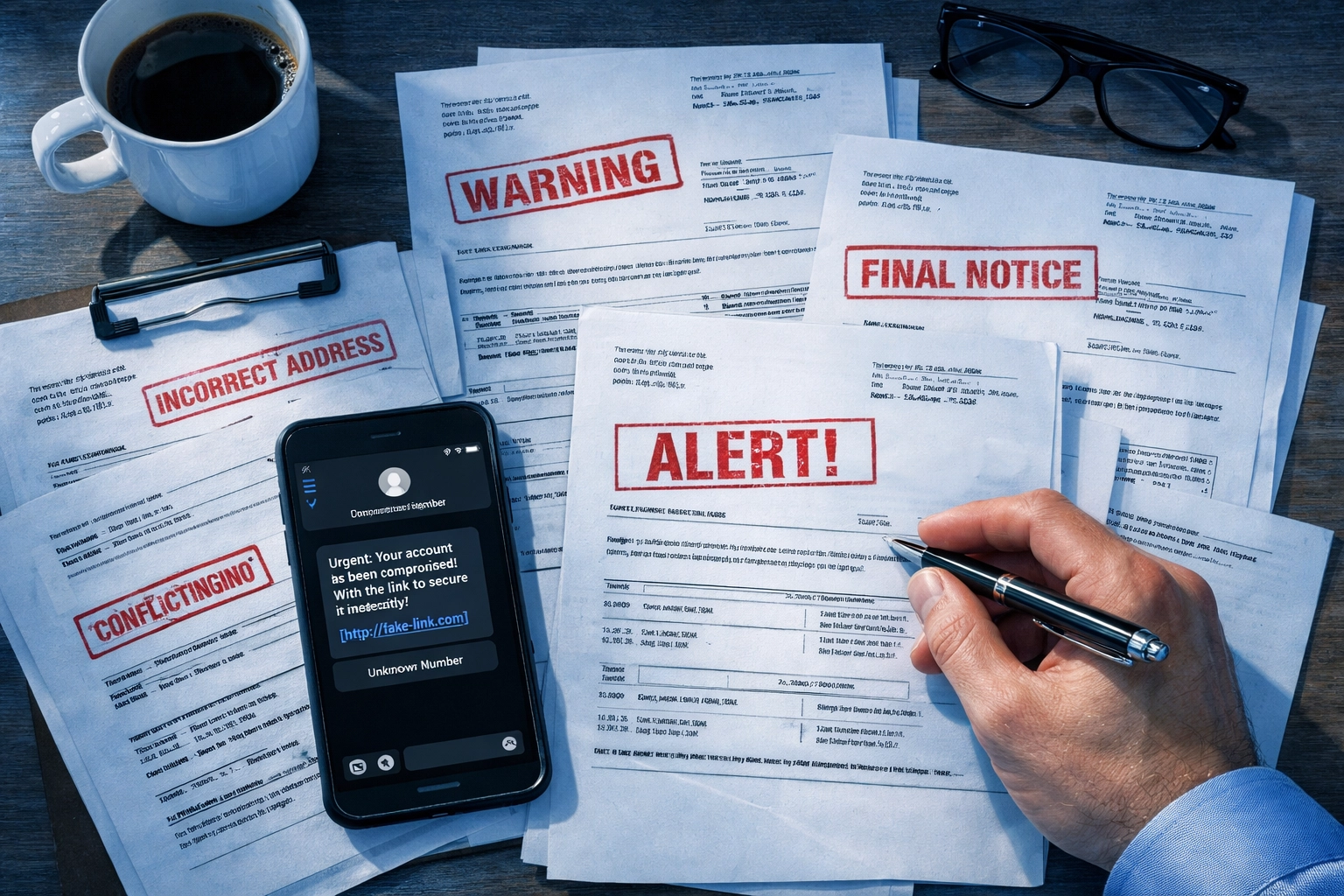
The deepest red flag in the Hallandale Beach case was the property ownership itself. The home belonged to a deceased woman whose relatives were still paying taxes. It was never listed for sale.
Your title company should be running a full chain-of-title search and verifying that the person selling the property is actually the legal owner. Check for:
- Recent transfers of ownership that don't match public records
- Forged notarization stamps (common in deed fraud)
- Power of attorney documents that seem unusually broad or recent
- Missing or altered signatures on closing documents
Independence Title uses a multi-layered verification system that includes title searches, public records checks, and human verification at every step. We've seen forged IDs, fake passports, and altered deeds. Technology helps, but nothing replaces a trained professional reviewing every detail.
Why Independence Title's Verification Process Works
We don't just rely on one verification method. We use a combination of technology, public records, and old-fashioned human scrutiny.
Our secure IT system flags inconsistencies automatically. But our team also conducts live verification calls, reviews supporting documents manually, and cross-checks every piece of information against multiple sources.
We've stopped wire fraud. We've caught forged documents. And we're actively training our team to recognize AI-generated deepfakes before they cost our clients hundreds of thousands of dollars.
If you're buying or selling property in South Florida, your closing should involve a title company in Fort Lauderdale, FL that takes fraud prevention seriously. Not every company does. And the cost of cutting corners is catastrophic.
What You Should Do Right Now
If you're in the middle of a real estate transaction, take these steps immediately:
Verify your title company's fraud prevention protocols. Ask them directly: How do you verify seller identity? What happens if wiring instructions change? Do you conduct live video verification?
Never wire money based on emailed instructions alone. Always call your title company using a phone number you looked up independently: not one provided in the email.
Request a secure communication portal. Independence Title uses encrypted systems for document sharing and wiring instructions. If your title company is still relying on regular email, you're vulnerable.
Insist on multi-factor verification for high-value transactions. A single video call isn't enough anymore. Request document verification, public records checks, and live identity confirmation.
Trust your instincts. If something feels rushed, odd, or inconsistent, speak up. A legitimate closing can wait 24 hours for proper verification. A fraudulent one can't.
The Bottom Line
Deepfake fraud is no longer theoretical. It's happening in South Florida, and it's getting more sophisticated every month.
The Hallandale Beach case was stopped because a diligent title company asked one more question. The next case might not be so lucky.
Your title company in Broward should be your first line of defense against AI-driven fraud. If they're not actively screening for deepfakes, geographic inconsistencies, and document mismatches, you're closing with the wrong team.
At Independence Title, we've built our reputation on protecting clients from every kind of fraud: including the ones most companies don't even know exist yet. We're not just processing paperwork. We're standing between you and criminals who are using cutting-edge technology to steal your money.
That's the difference between a title company that checks boxes and one that actually protects your investment. Choose carefully.