
Your lender just told you the survey is "optional." Great news, right? You can save a few hundred dollars on closing costs.
Not so fast.
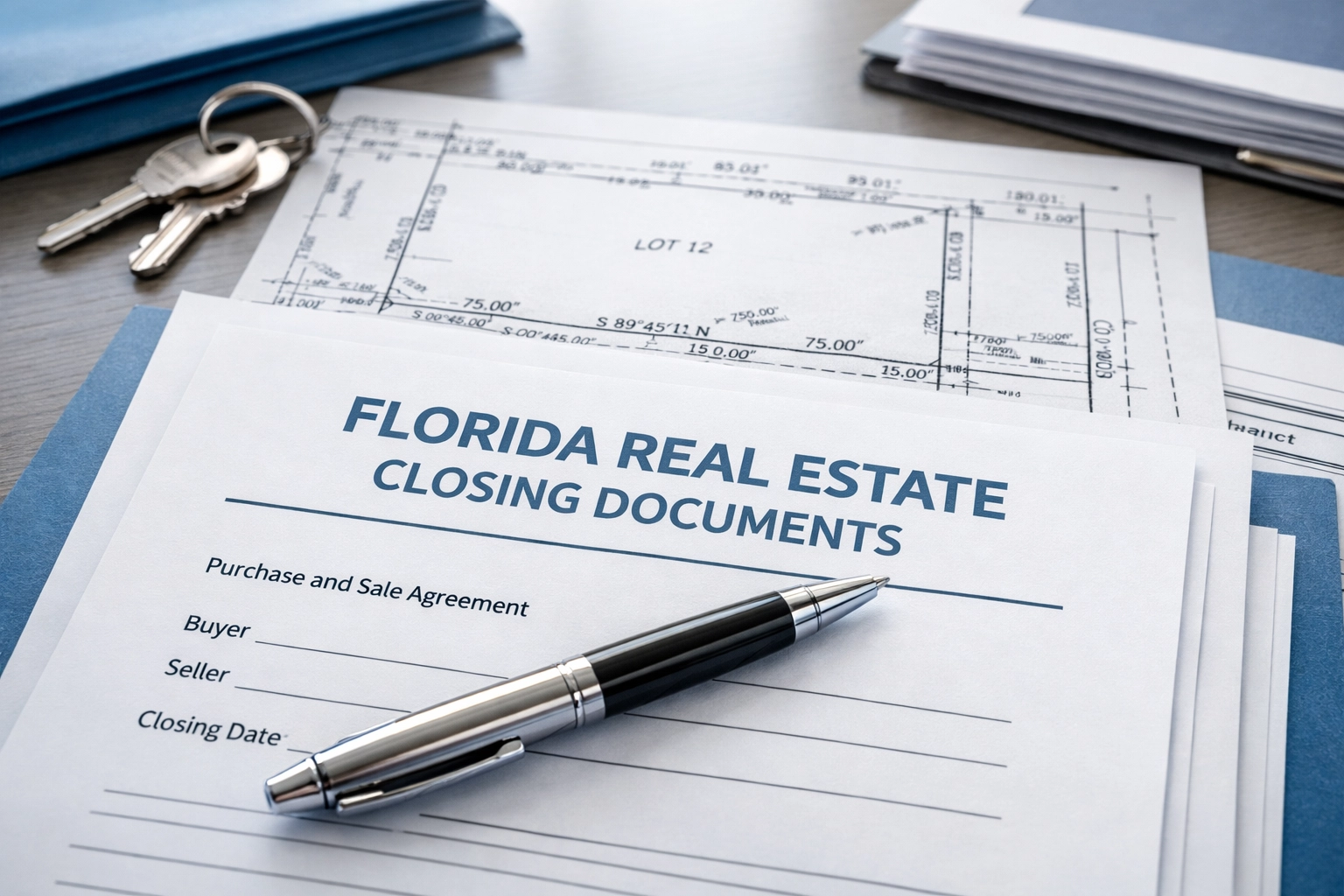
Here's what most buyers: and even some real estate agents: don't realize: While Florida law doesn't legally require a property survey, your lender almost certainly requires something called a Florida Form 9 Endorsement on their title policy. And guess what? That endorsement can't be issued without a current survey.
So "optional" quickly becomes "mandatory" the moment you need financing. Let's break down what boundary surveys actually are, why they matter, and how the Form 9 endorsement turns surveys from a suggestion into a requirement.
What Is a Boundary Survey?
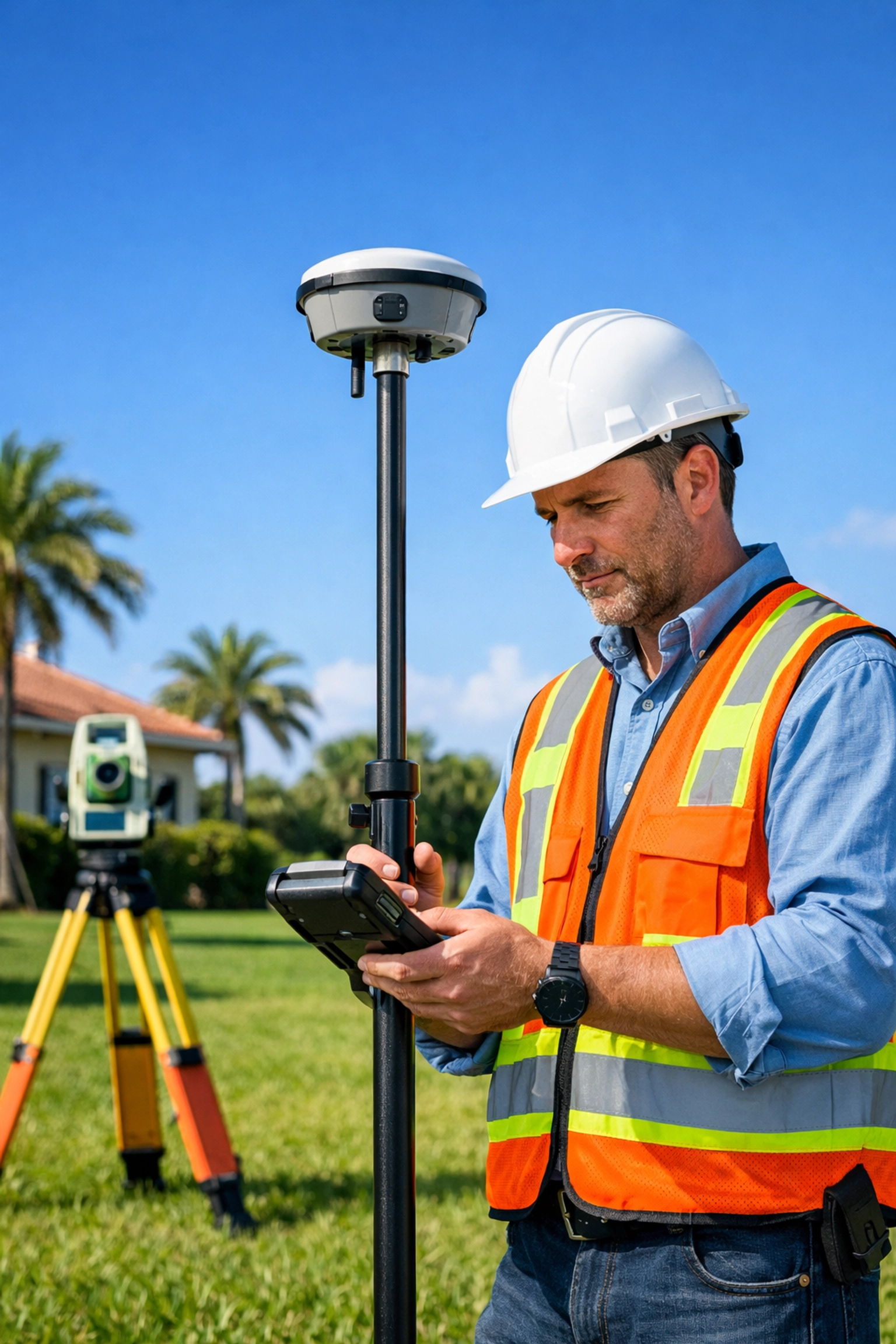
A boundary survey is a detailed map prepared by a licensed surveyor that shows the exact legal boundaries of a property. Think of it as a precise blueprint of where your land starts, where it ends, and what sits on it.
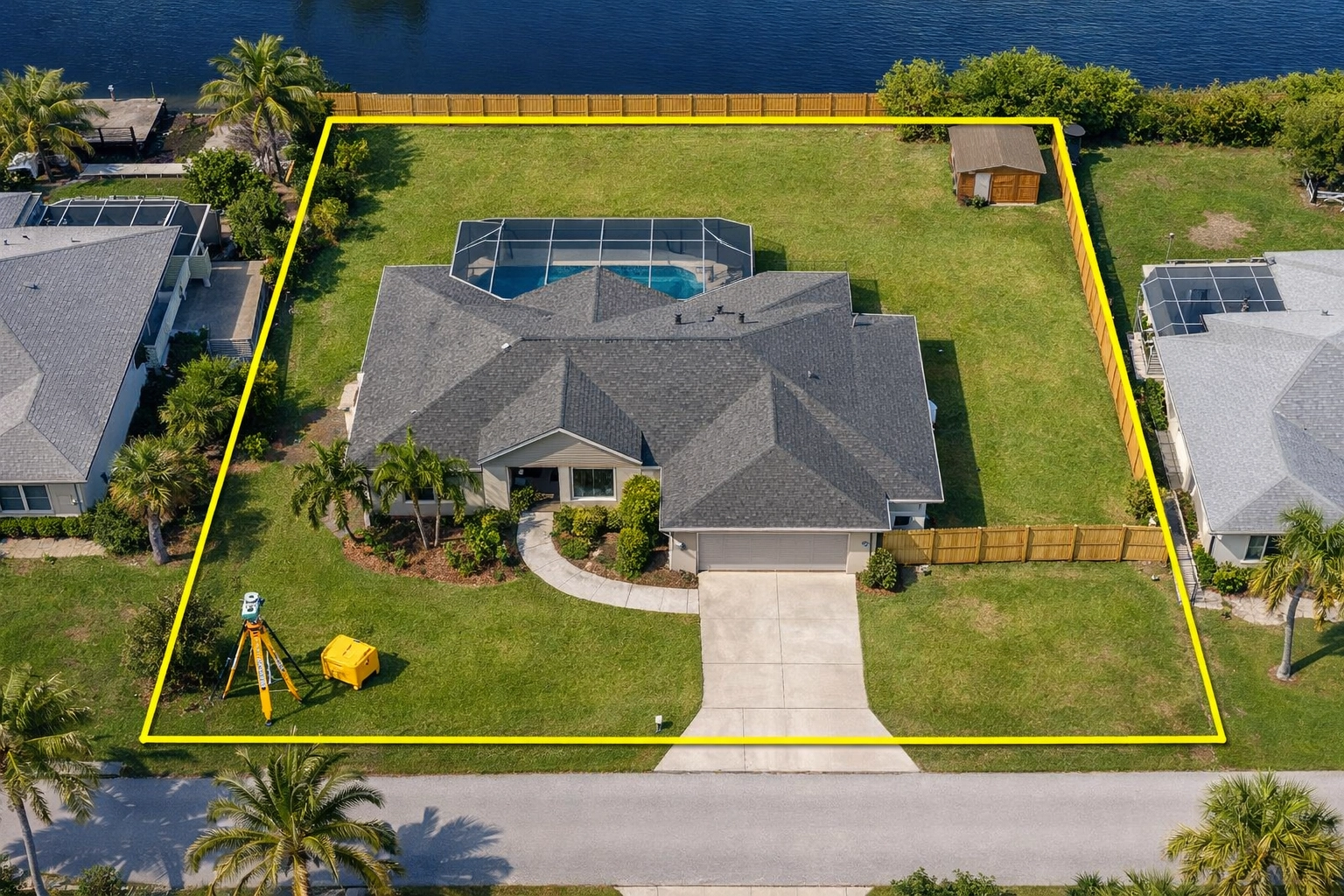
A typical boundary survey includes:
- Property lines and dimensions – The exact measurements of your lot
- Building locations – Where structures sit in relation to property lines
- Easements – Rights of way that utilities, neighbors, or municipalities have across your property
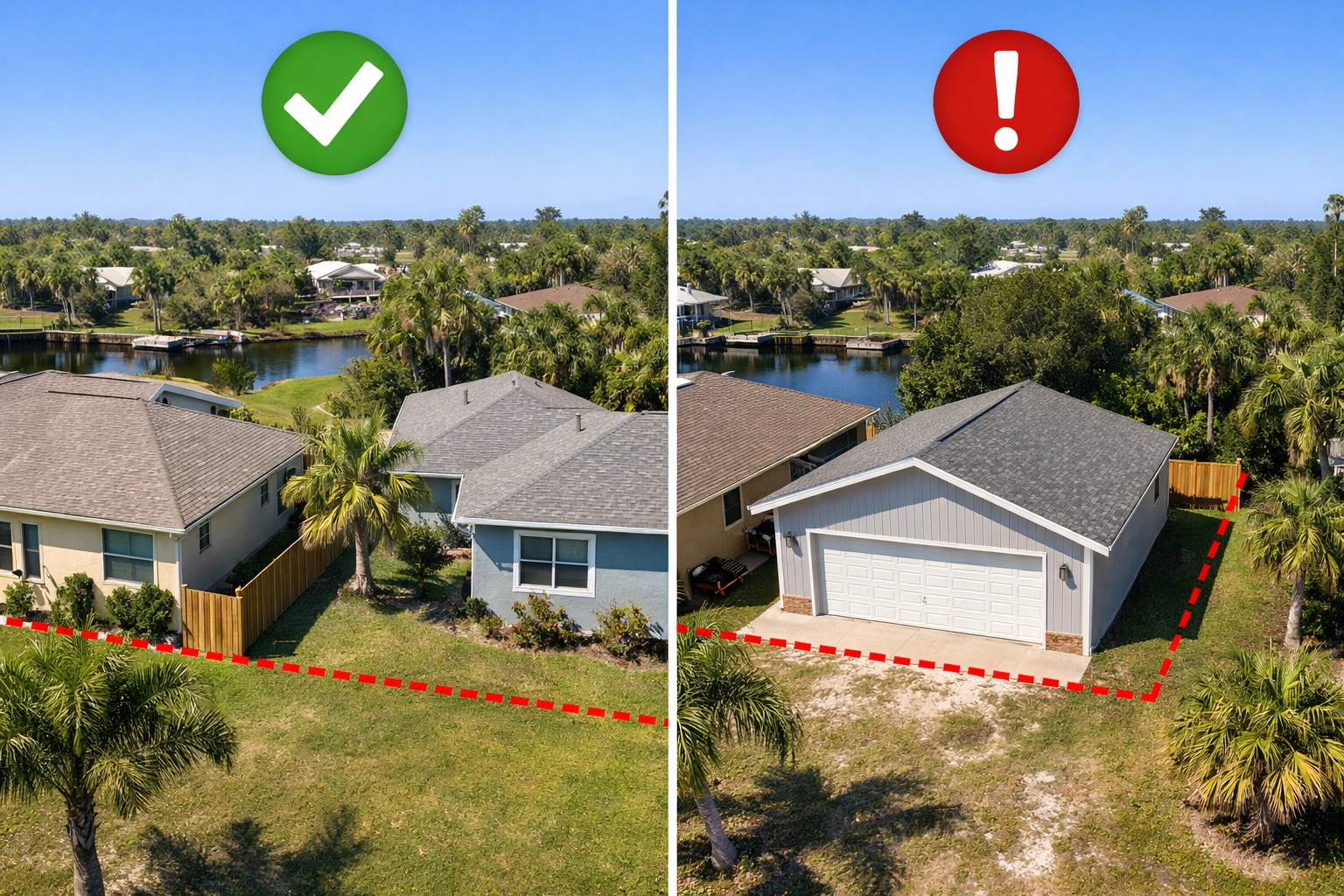
- Encroachments – Any improvements (fences, driveways, structures) that cross property lines
- Setback lines – Minimum distances required between buildings and property boundaries
- Flood zones – FEMA designations that affect insurance and construction
The surveyor physically visits the property, locates boundary markers (or sets new ones if they're missing), and measures everything to create an accurate, scaled drawing.
How Much Does a Boundary Survey Cost in Florida?
In South Florida, you can expect to pay between $400 and $800 for a standard residential boundary survey, depending on property size, location, and complexity.
Factors that influence cost include:
- Lot size – Larger properties take more time to measure
- Vegetation and accessibility – Overgrown lots require more clearing work
- Age of previous survey – If there's no recent survey, the job takes longer
- Property complexity – Odd shapes, waterfront access, or disputed boundaries add time
While $500 might feel like an unnecessary expense when you're already juggling down payments and closing costs, that survey protects you from far more expensive problems down the line: like discovering your pool encroaches three feet onto your neighbor's property.
Why Surveys Matter at Closing
Even if you're tempted to skip the survey, here's what you're risking:
Hidden encroachments – Your neighbor's shed might be two feet over your property line. Or worse, your fence might be on their land.
Easement surprises – That beautiful spot where you planned to build a deck? It could sit on a utility easement where construction isn't allowed.
Zoning violations – Additions or structures built by previous owners might violate setback requirements, putting you at risk for code enforcement actions.
Future sale complications – When you eventually sell, the next buyer's lender will require that survey. If problems surface then, they become your problem to fix.
A survey gives you clarity before you commit to the purchase. It's your chance to negotiate repairs, request credits, or even walk away if the issues are significant.
Why Many Investors Skip Surveys (and How It Can Backfire)
If you're a real estate investor: especially on cash deals: you’ve probably heard some version of, “Skip the survey. We’ll close faster.”
And honestly, investors skip surveys for two common reasons:
- To save money – If you’re doing volume, that $400–$800 per deal feels like it adds up fast.
- To close quicker – On assignments, double closings, or any tight timeline, ordering a survey can feel like “one more thing” that slows the train down.
The problem is that surveys don’t just protect lenders. They protect you from the stuff that isn’t obvious on a quick walkthrough or a Google Maps view.
Here’s how skipping the survey can come back to bite you later:
- Hidden encroachments – A fence, driveway, shed, pool, or addition can cross the property line. You might not find out until a neighbor complains: or until your buyer’s lender orders a survey and the deal stalls.
- Boundary and lot-size surprises – The legal description may not match what you think you’re buying. That extra strip of “yard” you assumed was included might not be yours at all.
- Easements you didn’t plan for – Utility or drainage easements can kill future plans (adding an ADU, expanding a driveway, building a fence, etc.) and can create resale headaches if improvements end up in the wrong place.
- Fixing it is rarely cheap – Moving a fence, redoing a driveway approach, getting a boundary agreement, or negotiating an easement release can cost way more than the survey would have: and it can take months.
Bottom line: skipping the survey may feel like a smart speed play, but it can turn into a very expensive surprise at resale: especially when the next buyer is financed and the lender wants a clean survey review.
The Florida Form 9 Lender Endorsement: The Real Reason Surveys Aren't Optional
Here's where the "optional" survey myth falls apart.
Most institutional lenders: banks, credit unions, mortgage companies: require a clean Florida Form 9 Endorsement (officially called Form 9-06) as a condition of your loan. This endorsement is an add-on to the lender's title insurance policy that provides coverage against specific risks:
- Violations of recorded restrictions
- Encroachments into easements
- Encroachments over building setback lines
- Encroachments across property lines
- Damage from mineral extraction or development
The catch? Your title company cannot issue a Form 9 endorsement without reviewing a current survey. It's impossible. The endorsement is based entirely on what the survey reveals.
So even though Florida law doesn't require surveys, and even though your lender might phrase it as "optional," the practical reality is this: No survey means no Form 9 endorsement. No Form 9 endorsement means no loan approval.
When your lender needs financing and requires that endorsement, guess who wins? The lender. Every time.
What Makes a "Clean" Form 9?
To issue a clean Form 9 endorsement, the survey needs to show minimal or no encroachments. Your title agent reviews the survey and determines whether any issues are significant enough to require exceptions.
Minor encroachments that typically still allow a clean Form 9:
- A driveway corner slightly in an easement
- An air conditioning pad encroaching into a utility easement
- A fence a few inches over the setback line
These are considered de minimis: so minor they pose little practical risk.
Significant encroachments that may prevent a clean Form 9:
- A garage or addition crossing the property line
- A structure built entirely within a major easement
- Buildings violating setback requirements by several feet
If serious encroachments exist, your title company might issue a Florida Form 9.2 endorsement instead. This version provides affirmative coverage: meaning it protects you if you're later forced to remove the encroaching structure. But not all lenders accept Form 9.2 as a substitute for the standard Form 9.
Elevation Certificates: Another "Optional" Document You Probably Need
While we're talking about surveys, let's address another document that's often misunderstood: the elevation certificate.
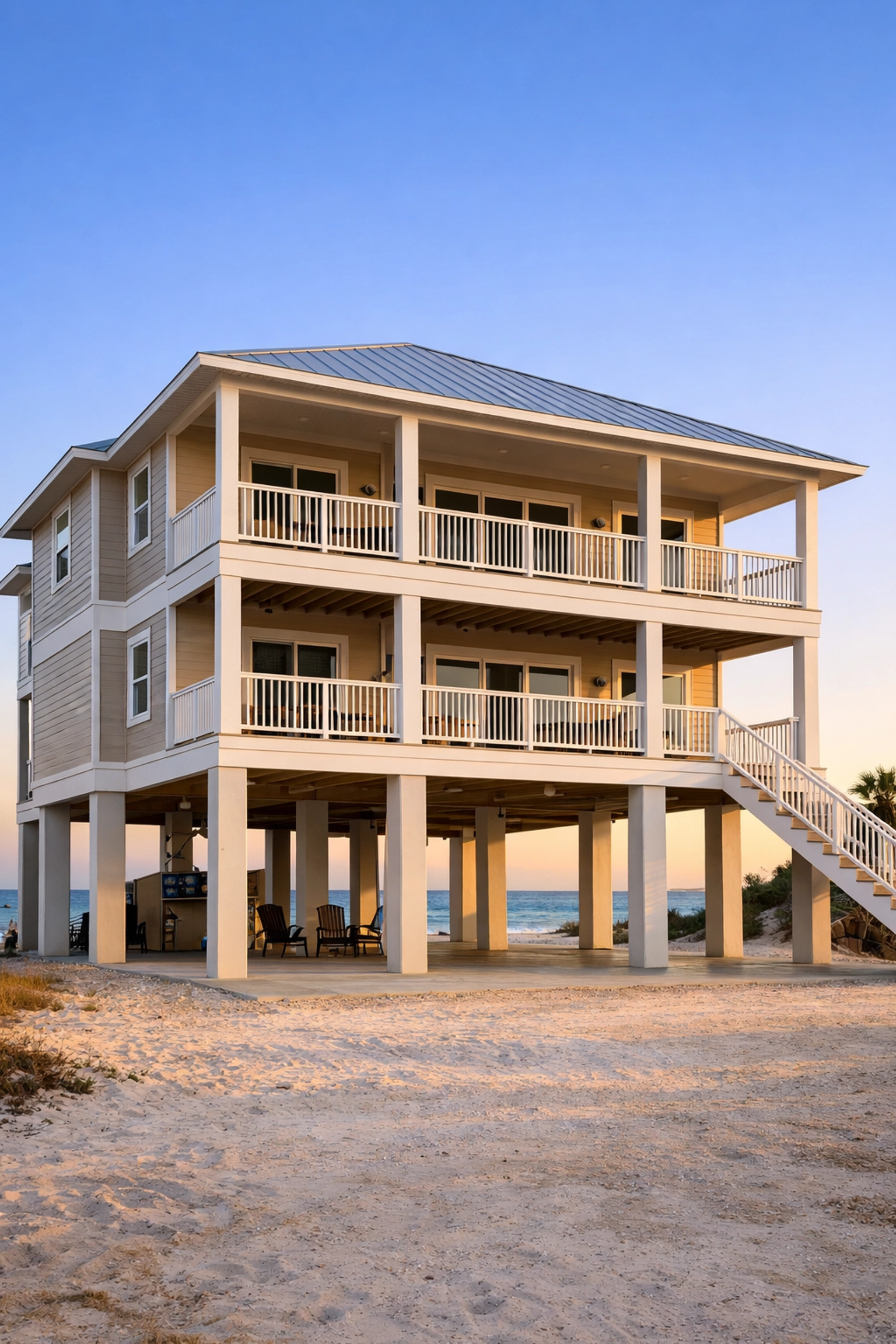
An elevation certificate is a form completed by a licensed surveyor that documents a building's elevation relative to the Base Flood Elevation (BFE) established by FEMA. It shows whether your home sits above, below, or at the flood risk level for your area.
Why Elevation Certificates Matter
Flood insurance rates – Your elevation certificate directly impacts your flood insurance premium. A home elevated above the BFE can qualify for significantly lower rates.
Lender requirements – If your property is in a Special Flood Hazard Area (SFHA), your lender will require flood insurance, and the insurance company needs the elevation certificate to quote accurate rates.
Compliance documentation – Many coastal and low-lying Florida properties need elevation certificates for building permits, renovations, or additions.
Resale value – Having an up-to-date elevation certificate in hand makes your property more attractive to future buyers, who won't need to order one themselves.
How Much Does an Elevation Certificate Cost?
Expect to pay between $200 and $500 for an elevation certificate in Florida. Many surveyors offer package deals if you're ordering both a boundary survey and an elevation certificate at the same time: often saving you $100 or more.
If your property is in a flood zone (and much of South Florida is), don't wait until closing to order the elevation certificate. Get it early so you can factor accurate flood insurance costs into your budget.
The Bottom Line for Buyers and Agents
If you're a homebuyer, here's what you need to know:
- Budget for a boundary survey even if your lender calls it "optional"
- Order the survey early in the process to avoid closing delays
- If you're in a flood zone, get the elevation certificate at the same time
- Review the survey carefully with your agent and title company before closing
If you're a real estate agent, set the right expectations:
- Explain to your clients that surveys are effectively required when financing is involved
- Recommend ordering surveys during the inspection period, not the week before closing
- Help buyers understand what encroachments or easement issues mean for their purchase
- Build survey and elevation certificate costs into your buyer consultation conversations
At Independence Title, we work with buyers, sellers, and agents every day to make Florida closings as smooth as possible. We'll review your survey, explain what the Form 9 endorsement covers, and help you understand any encroachments or title issues before you sign.
Whether you need guidance on survey requirements, elevation certificates, or any other part of the closing process, our team is here to help.
Because when it comes to protecting your investment, "optional" doesn't mean skippable: it just means someone didn't explain why it matters yet.