
You’re days away from closing on your dream home. Your phone rings, and it’s your real estate agent’s voice on the other end. She tells you there’s been a last-minute change to the wire instructions. Sounds legit, right?
Here’s the problem: that wasn’t your agent. It was a scammer using AI-generated voice cloning technology. And in the time it takes to hit “send” on that wire transfer, your life savings could vanish forever.
Welcome to AI Fraud 2.0. It’s real, it’s happening right now, and it’s targeting real estate transactions across South Florida and beyond.
The New Face of Real Estate Fraud
Remember when spotting a scam was as simple as catching a typo in a phishing email? Those days are gone.
Today’s fraudsters have upgraded their toolkit. They’re using deepfake technology and voice cloning to impersonate real estate professionals with terrifying accuracy. We’re not talking about obvious robotic voices or glitchy video calls. We’re talking about AI that can replicate someone’s voice using just three seconds of audio: with 85% accuracy.

Think about that for a second. A scammer can pull a clip from your agent’s Instagram story, a podcast appearance, or even a voicemail greeting. Minutes later, they’ve got a clone good enough to fool most people.
And the numbers back up just how dangerous this has become. Impersonation scams showed a jaw-dropping 1,400% year-over-year growth in 2025. Scams involving AI components extract 4.5 times more money than traditional scams: averaging $3.2 million per operation.
This isn’t amateur hour. This is organized, industrialized fraud with professional money laundering networks behind it.
How These Scams Actually Work
So how do criminals pull this off? Let’s break down the most common tactics we’re seeing as a title company in Fort Lauderdale.
Voice Cloning During Calls
Scammers clone the voices of agents, closers, or even attorneys. They call buyers or sellers at critical moments: usually right before closing: and provide fraudulent wire instructions. The voice sounds exactly like someone you trust, so you don’t think twice.
Deepfake Video Impersonation
Some fraudsters take it a step further with video. They create realistic deepfakes of real estate professionals for video calls. You think you’re looking at your agent or title closer on Zoom. You’re actually looking at an AI-generated impostor.
Seller Impersonation Fraud
This one’s particularly nasty. Scammers pose as property owners: usually targeting lien-free vacant land or unoccupied properties. They push for below-market sales, quick cash closings, and remote transactions via text or email. By the time anyone realizes the real owner had no idea their property was “sold,” the money is long gone.

Sophisticated Phishing Infrastructure
Forget those obvious fake emails. Today’s fraud operations use phishing-as-a-service tools with hundreds of templates for websites that look identical to legitimate title companies, banks, and real estate firms. One wrong click, and you’re handing over your credentials to criminals.
Why Real Estate Closings Are Prime Targets
You might wonder why scammers focus so heavily on real estate. The answer is simple: the money.
Real estate transactions involve massive sums moving quickly between multiple parties. A typical closing might involve hundreds of thousands of dollars: sometimes millions: changing hands in a single wire transfer. For criminals, that’s an irresistible target.
And here’s what makes it even scarier: once that wire hits the wrong account, it’s usually gone within minutes. Banks can sometimes freeze funds if you catch it fast enough, but the window is incredibly small. Most victims never recover their money.
We’re talking about people losing their entire down payment. Their life savings. Years of hard work, wiped out in an instant because they trusted a voice that sounded exactly like someone they knew.
As a Broward County title company, we’ve seen firsthand how devastating these scams can be. And it’s exactly why we’ve built serious protections into every transaction we handle.
How Independence Title Protects You
Look, we’re not going to sugarcoat it. AI fraud is sophisticated, and it’s evolving fast. But that doesn’t mean you’re defenseless. Far from it.
At Independence Title, we’ve implemented multiple layers of security specifically designed to stop these scams in their tracks. Here’s how we keep your funds safe:
Two-Factor Authentication
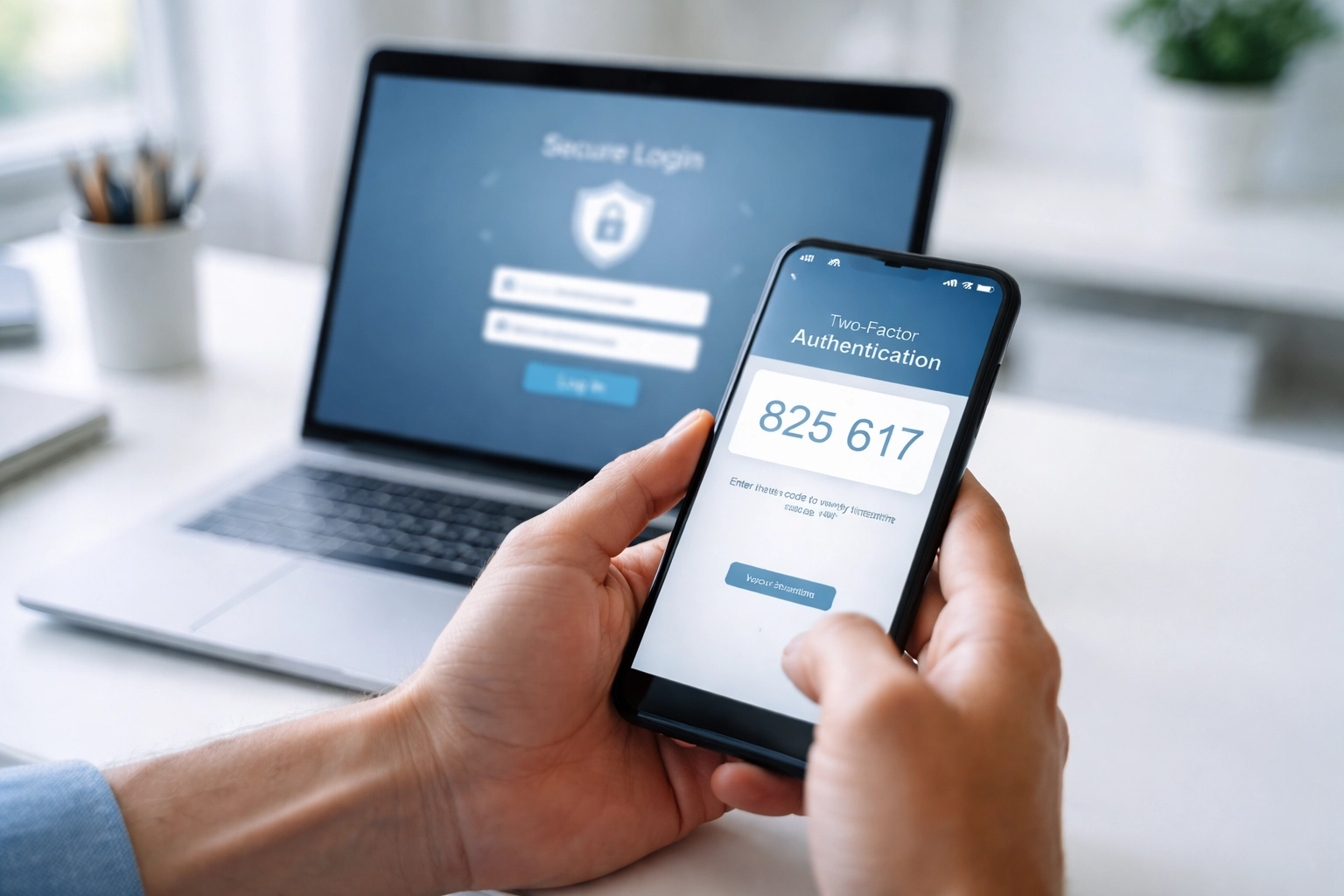
Every critical action in your transaction requires two-factor authentication. That means even if a scammer somehow gets your password or login credentials, they still can’t access your account or authorize transactions without that second verification step.
It’s an extra few seconds for you. It’s a brick wall for fraudsters.
Phone Verification Protocols
Here’s where the human element comes in: and it’s crucial.
Before any wire instructions are sent or changed, we verify by phone. But not just any phone call. We call you back at a number we already have on file. Not a number from an email. Not a number someone gives us during a “quick call.” A number we verified at the start of your transaction.
This simple step stops voice cloning scams cold. A fraudster might be able to clone your agent’s voice, but they can’t intercept a callback to your verified phone number.
Never Trust Last-Minute Changes
We train our team: and our clients: to be extremely skeptical of any last-minute changes to wire instructions. Legitimate closings rarely involve sudden changes to where money should go. If something feels off, we stop, verify, and confirm before moving forward.
Education and Awareness
We believe informed clients are protected clients. That’s why we share resources like our guide on 7 tips for preventing wire fraud and real stories like a single mother’s struggle against wire fraud. When you know what to look for, you’re much harder to fool.
What You Can Do to Protect Yourself
While we handle the heavy lifting on security, there are steps you can take to add another layer of protection:
- Never wire money based on email instructions alone. Always verify by phone using a known number: not one provided in the email.
- Be skeptical of urgency. Scammers create panic to make you act without thinking. Legitimate professionals will give you time to verify.
- Confirm everything twice. If someone calls with new instructions: even if they sound exactly like your agent: hang up and call back at a number you trust.
- Watch for red flags. Requests for secrecy, pressure to act immediately, or instructions to wire to a different account than previously discussed are all major warning signs.
- Report suspicious activity. If something feels wrong, report it to local law enforcement and file a complaint at IC3.gov. Even if you catch it in time, reporting helps authorities track these operations.
The Bottom Line
AI fraud isn’t some distant threat. It’s happening right now, and real estate closings are squarely in the crosshairs.
But here’s the good news: with the right protections in place, you can close on your home with confidence. At Independence Title, we combine cutting-edge security measures like two-factor authentication with old-school human verification: because sometimes the best defense against AI is a real person picking up the phone and confirming who they’re talking to.
Your life savings deserve that level of protection. And when you work with a title company that takes security seriously, you don’t have to lose sleep wondering if that voice on the phone is really who they say they are.
Ready to close with confidence? Reach out to our team and let’s talk about how we keep your transaction safe from start to finish.