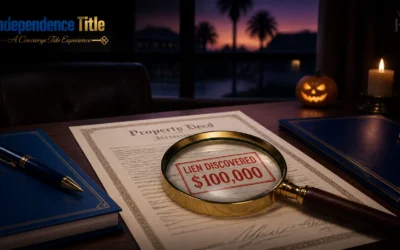

Picture this scenario in a standard Florida real estate closing. A closing company requests a payoff for an old recorded judgment, receives an official written statement for roughly nine dollars, and promptly wires the exact amount requested. Everyone shakes hands, the transaction closes, and the file is archived. Months later, during a routine title search for a subsequent refinance, a shocking discovery surfaces. The payoff had been issued in error, the underlying judgment for $44,000 plus compounding interest remained active, and the enforcement agency refused to release the lien from the property.
As Founder and CEO of Independence Title, I have seen how quickly a seemingly minor administrative miscalculation can escalate into a major title roadblock. When you need a reliable broward county title company or a trusted title company fort lauderdale, understanding the hidden mechanics of public records and liens is essential. Here is what every homebuyer, investor, and Realtor must know about why paying a lien is never the same as clearing title, and how robust florida title insurance companies safeguard your investment.
What Happened: The Anatomy of a Payoff Error
In many real estate transactions involving government-enforced or child support obligations, closing teams rely on written payoff figures provided by local depositories or clerks. Under statutory guidelines, these statements are designed to give a definitive accounting of what is owed at a specific moment.
In this case, the responsible office issued a written payoff for about nine dollars. The closing funds were disbursed accordingly in good faith. However, the creditor later asserted that the statement was incorrect and that the full $44,000 balance was still due. Because no proper satisfaction or release was executed and recorded in the county public records, the judgment continued to attach to the real estate like an unyielding shadow.

Why the Judgment Still Affected the Property
A fundamental principle governs every title search across the state of Florida: public records rule the chain of title. There is a profound legal distinction between a debt being paid and a lien being released.
- Paid: Money was delivered based on official payoff instructions.
- Released: A legally sufficient document was executed and recorded, formally removing the judgment from the property description.
If a release is never signed or recorded, the public records continue to reflect an outstanding encumbrance. Subsequent title examiners, lenders, and underwriters must evaluate the record as it stands today. A receipt showing payment to a clerk does not automatically override an active, unreleased judgment in the official county records.
“The written payoff may tell you what to pay, but the public records tell the next title examiner whether the lien is gone.”
Child support judgments and government liens introduce additional layers of complexity. They often involve multiple entities such as the Clerk of Court, county child support enforcement offices, the Florida Department of Revenue, family courts, and the individual creditor. A clerk may record documents but lack independent legal authority to compromise or partially release the underlying debt without explicit clearance from the court or creditor.
How Title Insurance Steps In
This is precisely where lenders title insurance florida and owner policies prove their immense value. When an unexpected title defect emerges after closing, a comprehensive title insurance policy establishes a financial and legal safety net.
Depending on the specific policy terms and facts, a title insurer may step in to:
- Investigate the origin of the payoff error and review public records.
- Contact the judgment creditor or government enforcement agency directly.
- Negotiate a formal release or a property-specific partial release.
- Retain legal counsel to defend against enforcement actions.
- Indemnify subsequent title insurers or purchasers to ensure smooth future transactions.
As we often say at Independence Title, Slow is smooth. Smooth is fast. When complications arise, having an experienced team that provides A Concierge Title Experience ensures that complex curative work is handled expertly behind the scenes so you can Protect what matters most.

Why a Property-Specific Partial Release Matters
When a full satisfaction of judgment is difficult to obtain immediately due to accounting disputes, a full satisfaction is not the only path forward. In many cases, creditors agree to a property-specific partial release.
This specialized legal instrument releases the lien exclusively from the single parcel involved in your transaction while preserving:
- The full remaining balance of the judgment and accrued interest.
- Personal liability against the judgment debtor.
- Collection rights and enforcement remedies against other assets or properties.
This solution allows a property to achieve a clear and marketable title, enabling a sale, refinance, or transfer to proceed without delay, while leaving the creditor’s broader enforcement rights intact. However, such a release requires proper authorization from the creditor, agency, or court.
“A lien is not truly cleared until the proper release is recorded.”
Five Steps to Avoid Payoff Surprises
To protect your next transaction from unexpected judgment liabilities, incorporate these practical safeguards into your closing playbook:
- Do Not Stop at the Payoff: Confirm that your closing file contains proof of payment, delivery confirmation, a recordable satisfaction or release, and a final title update showing the lien is gone.
- Match Every Detail: Verify debtor names, court case numbers, child support account numbers, legal descriptions, and folio numbers meticulously. A minor discrepancy can misapply funds.
- Keep the Written Record: Archive every payoff request, written statement, email thread, and payment confirmation. Written records are vital if an insurer or agency must investigate an error.
- Confirm Recordation: Ensure the official release appears in the county’s official records before treating the title as fully cleared.
- Report Problems Promptly: Notify your title insurer immediately upon discovering a covered title defect, allowing professionals to manage the claims process.
“Title insurance matters most when the unexpected title problem becomes real.”

Conclusion
A payoff receipt is like receiving a restaurant bill showing what you owe, but a recorded release is like seeing the account officially marked closed in the ledger. When dealing with complex real estate transactions in Florida, never assume that paying a quoted amount automatically erases a recorded encumbrance.
Title insurance is much more than a routine fee paid at closing; it is an active defense system designed to protect your investment when unforeseen title hurdles appear. Partnering with dedicated professionals ensures that every detail is verified and every title defect is cured before it impacts your future.
Compliance and Educational Notes
- This case study is presented for general educational purposes and does not identify any specific debtor, property, clerk employee, county, or title company.
- Coverage under any title insurance policy depends strictly on policy language, policy dates, insured parties, specific exceptions, exclusions, and the unique facts of each transaction.
- This article does not constitute legal, financial, or tax advice regarding liability, estoppel, or sovereign immunity.
Disclaimer
This article is provided for general informational and educational purposes concerning Florida real estate and title insurance. It is not legal or tax advice. Title insurance coverage, lien resolution procedures, and statutory interpretations depend heavily on the specific policy language, public records, court documents, and facts of each individual transaction. Parties facing similar title or lien issues should consult a qualified Florida real estate or family law attorney and their title insurance underwriter.