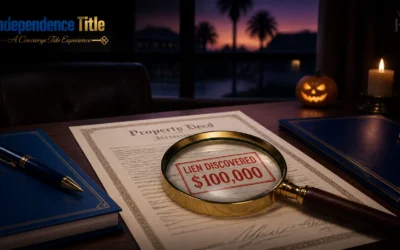

A house can look perfectly normal from the street and still have a serious problem hiding in the public records.
A forged deed can make it appear that someone else owns the property. An impersonator can sign a transfer. A fraudulent mortgage or lien can attach to the title. In the worst cases, an innocent buyer brings money to closing and discovers that the seller never had the legal right to sell.
That is how a real estate transaction becomes a nightmare.
This article is part of Independence Title’s Scary Stories in Real Estate series. The lesson is simple: verify before you trust the document, the person, and the wire.
The truth about fraudulent deeds
A deed is not automatically legitimate because it has been recorded.
In Florida, fraudsters may use forged signatures, stolen personal information, false identities, or unauthorized powers of attorney to create documents that appear to transfer ownership. They may target vacant homes, investment properties, properties owned by people who live out of state, or homes owned by elderly or vulnerable individuals.
A fraudulent transfer may be used to:
- Sell a property without the real owner’s permission
- Obtain a mortgage or home equity loan
- Place a lien against the property
- Transfer ownership to an accomplice
- Create a false chain of title before a resale
- Steal sale proceeds through a fake closing
Florida law treats the intentional filing of materially false or fraudulent documents affecting real property as a crime. The statute also provides civil remedies in appropriate cases, including the possibility of having a fraudulent instrument declared void. You can review Florida Statutes Section 817.535 for the statutory language.
The scary part is not only the forged document. It is the time it can take for the real owner, buyer, lender, or title professional to discover it.

The lesson: recorded does not mean verified
Public records provide notice of recorded documents. They do not eliminate the need for review.
A title search examines the ownership history and recorded matters affecting the property. The goal is to determine whether the seller can transfer good and marketable title and whether another person may claim an interest.
That review can uncover warning signs such as:
- An unfamiliar name in the chain of title
- A recent transfer that does not make sense
- Multiple transfers in a short period
- A deed from an owner who was deceased at the time of signing
- A quitclaim deed with unusual circumstances
- An unexplained mortgage, lien, or release
- A mailing address that suddenly changes
- A deed that does not connect logically to the previous owner
- Inconsistent signatures, names, dates, or legal descriptions
A title search is not a substitute for careful fraud prevention. It is one part of a larger process that includes identity verification, document review, secure communication, and disciplined closing procedures.
As The Title King, Kevin Tacher, Founder and CEO of Independence Title, often emphasizes, slow is smooth. Smooth is fast. Taking time to verify the details is faster than trying to repair a fraudulent closing after money and documents have moved.
Warning signs that deserve a closer look
Fraud rarely announces itself with a dramatic confession. It often arrives as a small inconsistency.
A seller may be difficult to reach by phone. The seller may insist on remote signing without a clear reason. The property may be vacant. The person at the closing table may look different from the identification provided. A power of attorney may appear at the last minute. A request may come to rush the transaction before anyone has time to ask questions.
None of these facts proves fraud by itself. Together, they should trigger additional review.
Be especially careful when:
- The seller wants to use a new email address or phone number
- The seller refuses a direct video or telephone conversation
- Identification appears damaged, altered, expired, or inconsistent
- The seller’s name does not match the vesting deed or contract
- A third party controls all communications
- Wire instructions change near closing
- Someone discourages you from contacting the title company directly
- The transaction involves an unusual assignment, double closing, or last-minute entity change
- The property owner is out of state, deceased, incapacitated, or difficult to independently contact
The answer is not panic. The answer is verification.
The identity verification playbook
A secure closing process should confirm that the person signing is the person authorized to sign.
That may include reviewing valid government-issued identification, comparing the identity information with the contract and title records, confirming the signer’s address and contact information, and asking reasonable questions about the transaction.
Additional steps may be appropriate when the risk is higher:
- Contact the owner independently. Use a known phone number or contact method. Do not rely only on contact information supplied in a suspicious email.
- Review powers of attorney carefully. Confirm that the document is valid, properly executed, and sufficient for the transaction. Legal questions should go to a qualified Florida attorney.
- Use secure remote procedures. Remote signings may require additional identity checks, live interaction, notarization, and document controls.
- Compare the signature history. Significant differences between the current signature and prior recorded documents deserve attention.
- Confirm capacity and authority. The signer should understand the transaction and have legal authority to act.
- Document the process. Keep appropriate records of verification, communications, authorizations, and unusual circumstances.

No checklist can guarantee that fraud will never occur. A disciplined process makes it harder for an impersonator to move through the transaction unnoticed.
Review the public records before the closing table
Property owners should periodically review the official records and property appraiser information connected to their property. Buyers and lenders should rely on a professional title search rather than assuming that a quick online search tells the full story.
Look for deeds, mortgages, liens, satisfactions, releases, and other recorded instruments that you do not recognize. Review the names, dates, addresses, legal description, and sequence of transfers.
Florida property owners may also want to enroll in available property fraud alert services. The Florida Clerks of Court Property Alert Services page provides information about alert programs offered through participating clerks.
If you are in Miami-Dade County, the Miami-Dade Clerk’s deed fraud guidance recommends monitoring records, requesting a certified copy of a suspicious deed, and contacting law enforcement and an attorney when fraud is suspected.
If you find an unfamiliar document:
- Do not ignore it
- Save copies and record the document number
- Contact the county clerk or recorder
- Notify your title company or underwriter if a transaction is involved
- Contact a Florida real estate attorney
- Report suspected criminal conduct to the appropriate law enforcement agency
- Do not attempt to correct or remove a recorded document on your own
A fraudulent deed may require a legal proceeding, including a quiet title action, to resolve the ownership record.
Secure the closing and verify the wire
Fraudsters do not always attack the deed. Sometimes they attack the money moving around the deed.
Email accounts can be compromised. Closing instructions can be spoofed. A fraudulent message may look almost identical to a legitimate message from a title company, lender, broker, or attorney.
Follow a strict rule: The wire is never real until it is verified.
Before sending funds:
- Confirm wiring instructions by calling a trusted, independently verified number
- Never rely only on a last-minute email
- Treat changes to instructions as a major warning sign
- Confirm the receiving account details verbally
- Use secure portals whenever available
- Avoid sending sensitive personal or financial information through ordinary email
- Call before sending, even if the message appears familiar
- If something feels rushed or unusual, stop and ask questions
Independence Title’s real estate wire fraud prevention guide explains why urgency, small email changes, and unverified instructions deserve immediate attention.
Identity fraud and wire fraud can occur in the same transaction. That is why every person involved in the closing has a responsibility to slow down when the facts do not line up.

How title insurance may respond
Title insurance may provide protection against certain covered risks that existed before the policy date, including some losses arising from forgery, fraud, impersonation, defective prior deeds, or claims by another person who says they own the property.
A title insurance policy may provide a defense or coverage for a covered claim. However, coverage depends on the specific policy language, exceptions, exclusions, endorsements, the timing of the issue, and the facts of the claim.
For example, the analysis may differ depending on whether:
- The fraudulent deed was recorded before or after the policy date
- The insured party purchased an owner’s policy or only a lender’s policy
- The insured knew about the defect before closing
- The issue falls within a policy exclusion or exception
- The loss resulted from a covered title defect or a separate payment fraud
- The required notice and claim procedures were followed
Read what title insurance covers and ask your title professional questions before closing. Title insurance is not a guarantee that every type of fraud, loss, or mistake will be covered. It is a risk protection product with defined terms.
If you suspect a title fraud issue after closing, notify the title insurer promptly, preserve all documents, and speak with a qualified attorney. Do not assume the problem will resolve itself.
Protect what matters most
A fraudulent deed can make a real owner look like a stranger. It can make a buyer believe a transaction is complete when the foundation is defective. It can turn a routine closing into a legal and financial emergency.
The defense is not fear. It is process.
Review the title. Verify the identity. Secure the documents. Confirm the wire. Ask the extra question. When the transaction feels rushed, stop.
At Independence Title, we believe in A Concierge Title Experience built on communication, security, and accountability. Learn. Teach. Lead. Repeat.
Before you sign, transfer funds, or accept a new document, ask yourself: Who verified this, and how do we know it is real?
This article provides general educational information only. It is not legal, tax, financial, or insurance advice. Laws and procedures may change. Title insurance coverage depends on the language of the applicable policy, its exceptions and exclusions, and the specific facts of the claim. Consult a qualified Florida real estate attorney, tax professional, or insurance professional for advice about your situation.